A Feat Nobody Has Fully Explained
The Great Pyramid alone contains an estimated 2.3 million blocks of limestone and granite, some weighing as much as nine tonnes, assembled without iron tools, pulleys, or the wheel as we know it. Its base is level to within a couple of centimetres across more than 230 metres, and its sides align to true north with an accuracy that still puzzles engineers. Archaeologists have found the workers' village nearby, complete with bakeries and a hospital, which tells us the builders were paid labourers, not slaves — but exactly how they moved and stacked stones the size of a small car remains debated.
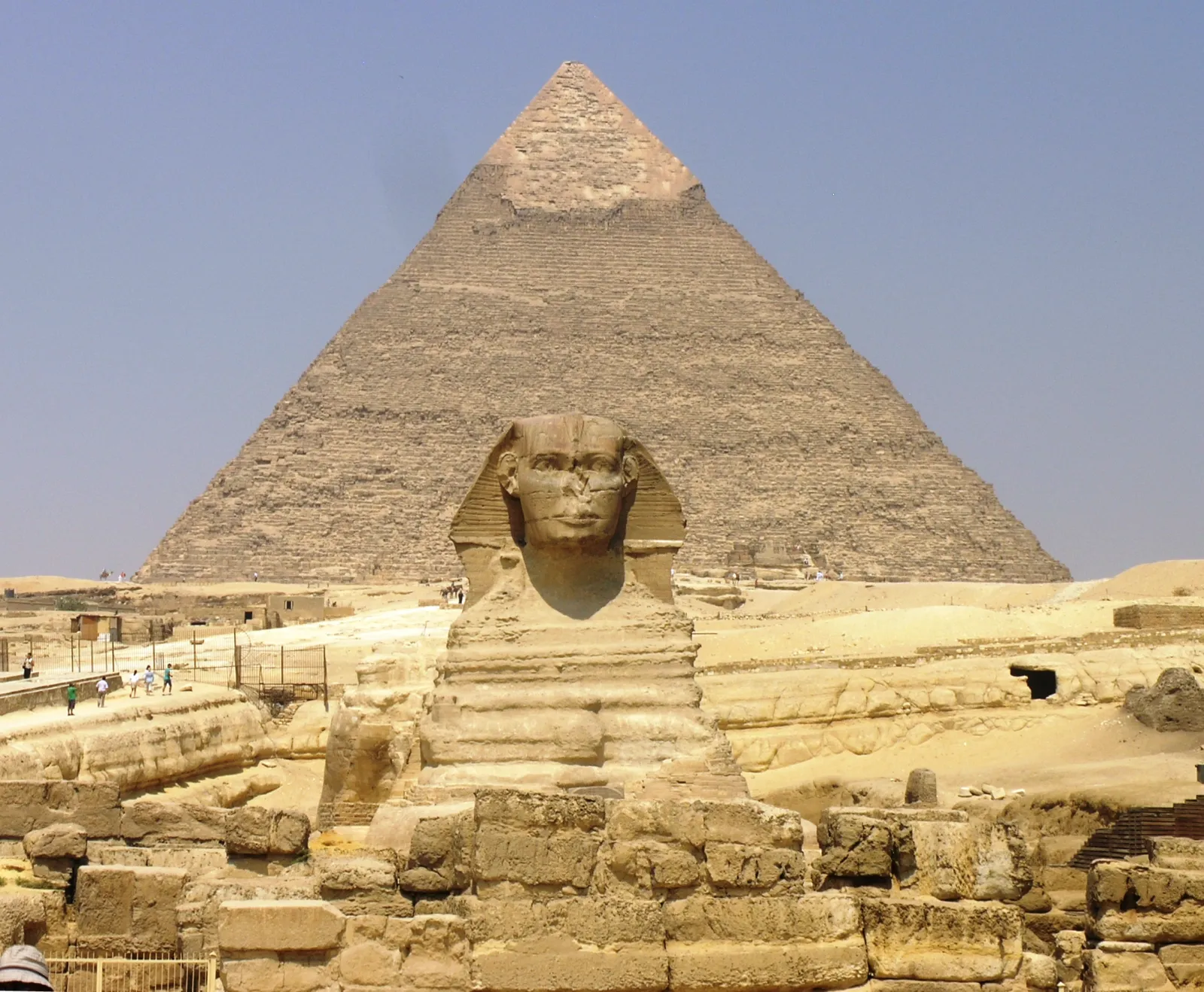
The Great Sphinx
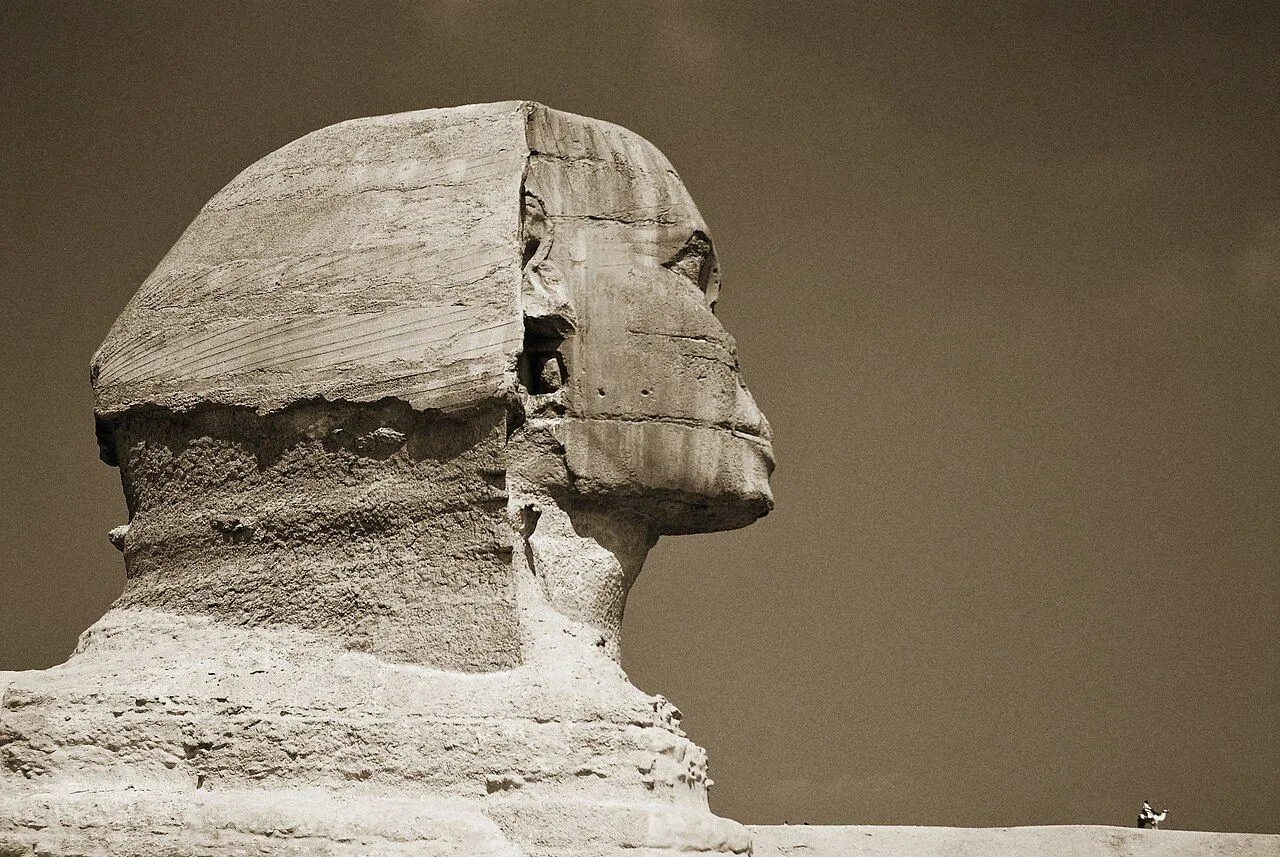
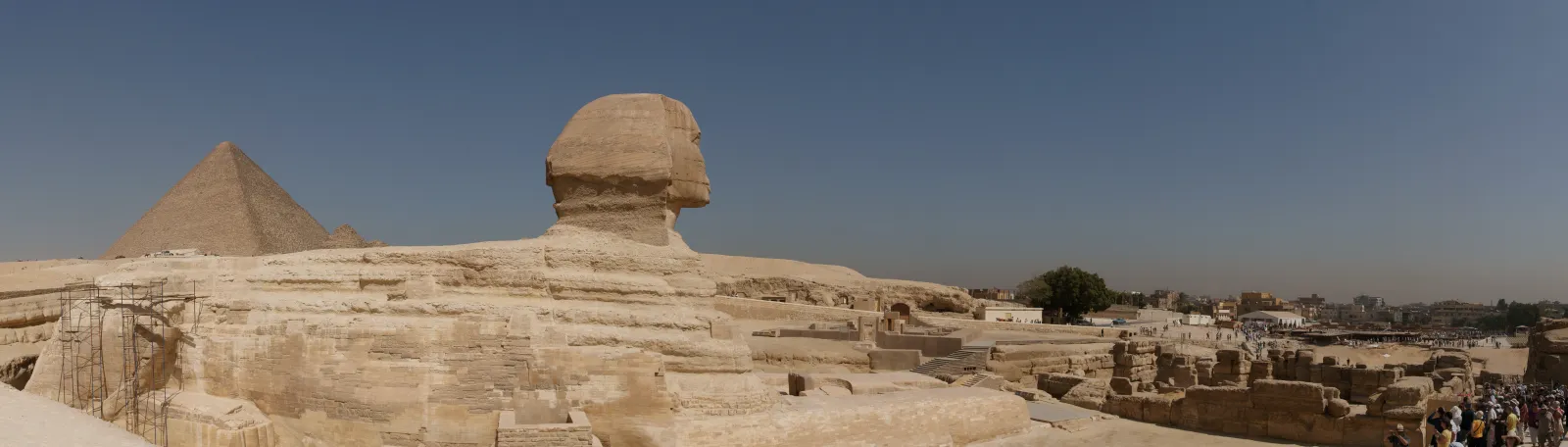
Carved from a single ridge of bedrock left over from the quarrying of Khafre's pyramid, the Sphinx has a lion's body and, most scholars believe, the face of Khafre himself. It has been buried up to its neck in sand more than once in its history and dug out again, most famously in a restoration linked to Thutmose IV. Its nose has been missing for centuries — likely deliberate damage rather than a Napoleonic myth — and it still faces due east, watching the sun rise over the Nile valley exactly as it has for roughly 4,500 years.
Going Inside the Pyramid
For an extra ticket, you can climb through the narrow Ascending Passage into the Grand Gallery and stand inside the King's Chamber, a bare granite room stripped of its treasures long ago but still humming with the sheer weight of stone overhead. It's hot, low-ceilinged, and not for anyone with claustrophobia — but it is the only Wonder of the Ancient World you can walk inside. Just outside the pyramid, the Solar Boat Museum houses a 4,600-year-old cedar vessel buried beside Khufu for his journey through the afterlife.
Planning Your Visit
Arrive at opening time, before the tour buses and the midday heat, and go straight to the panoramic viewpoint south of the plateau for the classic view of all three pyramids in one frame. Sturdy shoes matter more than anything else you pack — this is a working desert site, not a paved park. Most visitors combine Giza with the nearby Egyptian Museum in Cairo and, if time allows, the older step pyramid at Saqqara, a short drive south, where Egyptian monumental building began.